Background
The artistic and scientific trajectories this project grows from.
Santiago Reyes Villaveces
Sculpture, art direction, curatorship. Facultad de Arquitectura y Diseño, Universidad de los Andes. Bogotá, Colombia, 1986. santiago-reyes.com
Santiago’s work examines knowledge systems used to control and colonize nature. His work consists of drawings, installations (large-scale and site-specific), moving images, and sculptures. Santiago understands these formats as techniques to engage with systems of power and their contemporary materiality. His most recent projects take interest in today’s colonization of space, reflecting on the limits of extractivism and the survival of life-forms, within and beyond our planet.
[TODO: year]
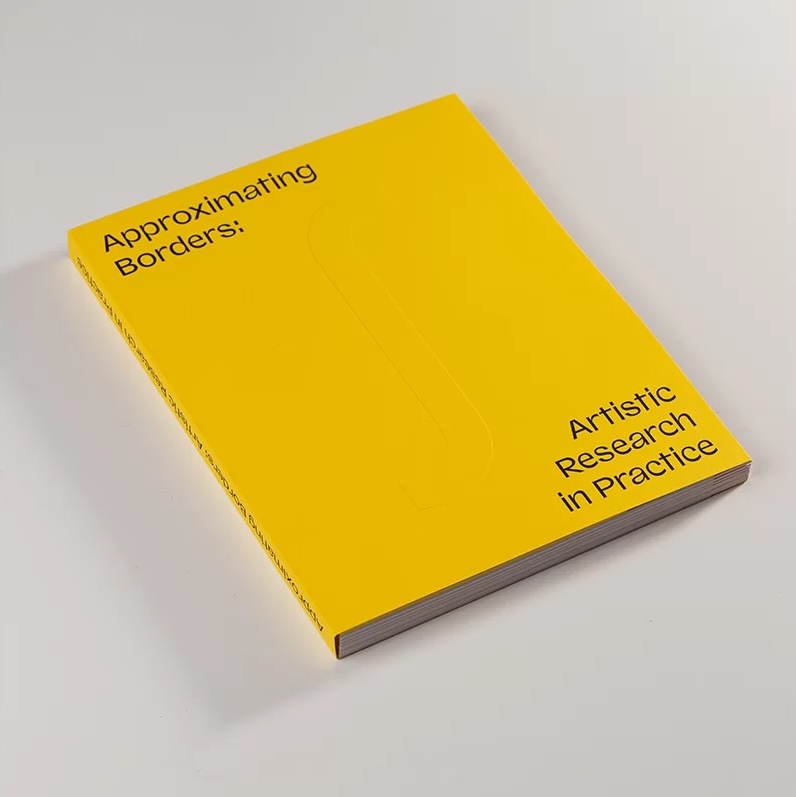
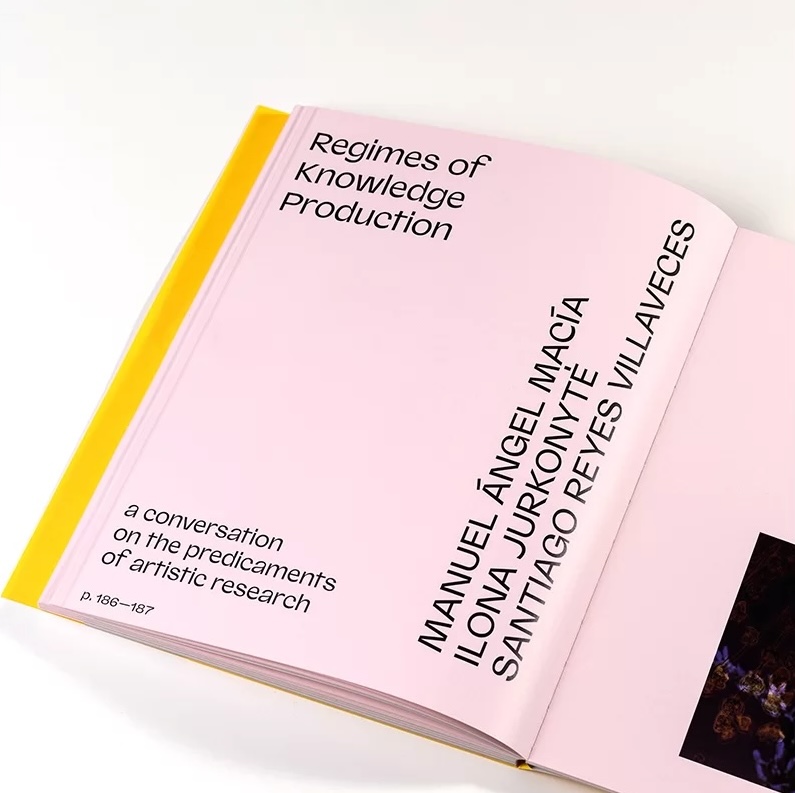
Regimes of Knowledge Production: a Conversation on the Predicaments of Artistic Research
Ilona Jurkonytė, Manuel Ángel Macía & Santiago Reyes Villaveces. In *Approximating Borders*. Academic paper.
A conversation on the relationship between artistic research, scientific knowledge, geopolitics, and the historical legacies of the Cold War, questioning how knowledge is produced, validated, and circulated, particularly when art and science intersect.
Its central argument is that research should not be understood as a neutral or universal process of knowledge production. Instead, it is shaped by historical, political, institutional, and technological structures that determine what counts as knowledge, who is authorized to produce it, and which histories become visible or remain marginalized. The authors use the Cold War not simply as a historical period or military confrontation, but as a continuing regime of knowledge production whose structures still influence contemporary institutions, technologies, and ways of understanding the world.
For Cosmic Organology: the paper offers a theoretical framework for understanding how art and science can come together to produce new ways of knowing and experiencing the universe, and explains why artistic practice can be an active form of research rather than simply a means of communicating scientific discoveries.
2022
Cosmic Sympathy
Solo exhibition. Casanova, São Paulo, 18 June – 23 July 2022.
A body of installations and drawings developed around Stoic cosmology and the concept of cosmic sympathy, the idea that all bodies and entities in the universe are interconnected through forces of attraction, even when they are separated by space or time. Gravitational force becomes the central thread connecting scientific discoveries, political histories, human perception and artistic experience.
“I See the Earth”: a red neon sign reproduces Yuri Gagarin’s words upon seeing Earth from space in 1961, evoking the planet as a shared and interconnected place of existence for human and non-human life.
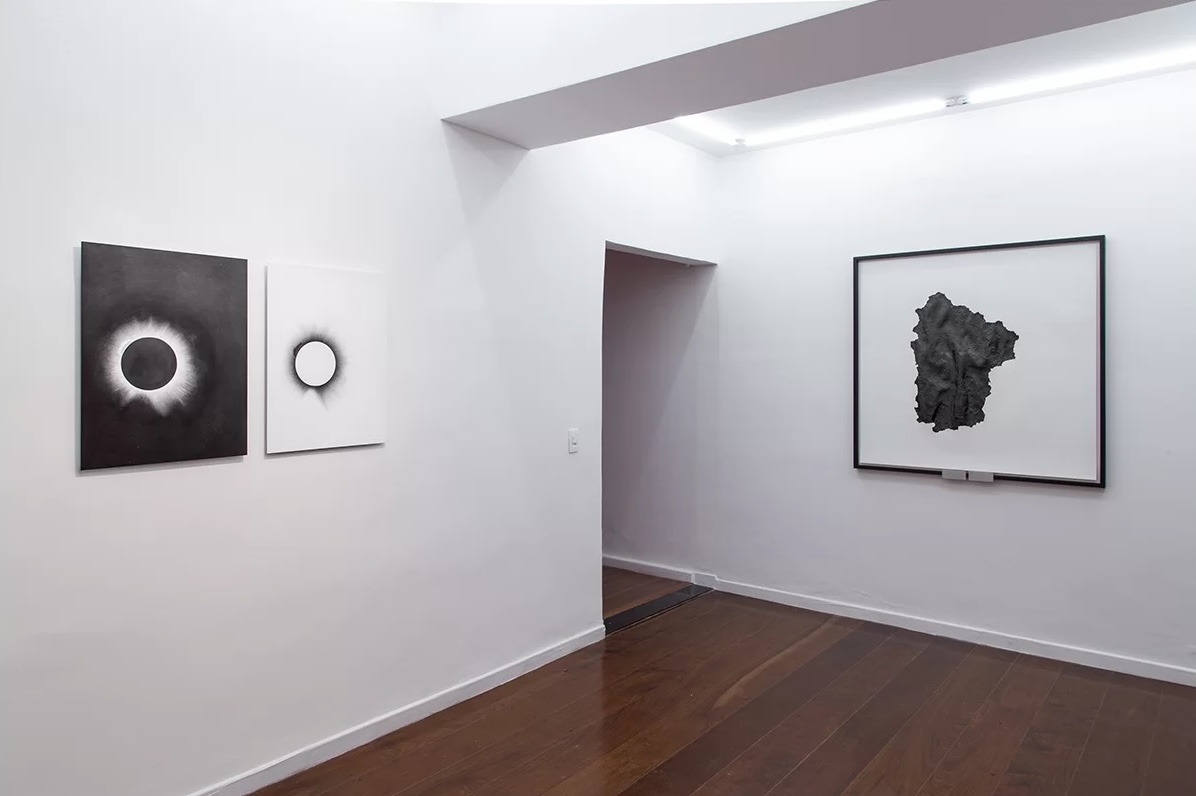
Lunar eclipse drawings: positive and negative drawings based on photographs of the 1919 eclipse in Sobral, Brazil, recall the empirical confirmation of Einstein’s theory of relativity.
Goodwill Moon Stone: a graphite drawing of the lunar fragment gifted by Richard Nixon to Brazil’s former president, Emílio Médici, in 1971, connecting gravity and space exploration with international diplomacy, political interests and colonial legacies.
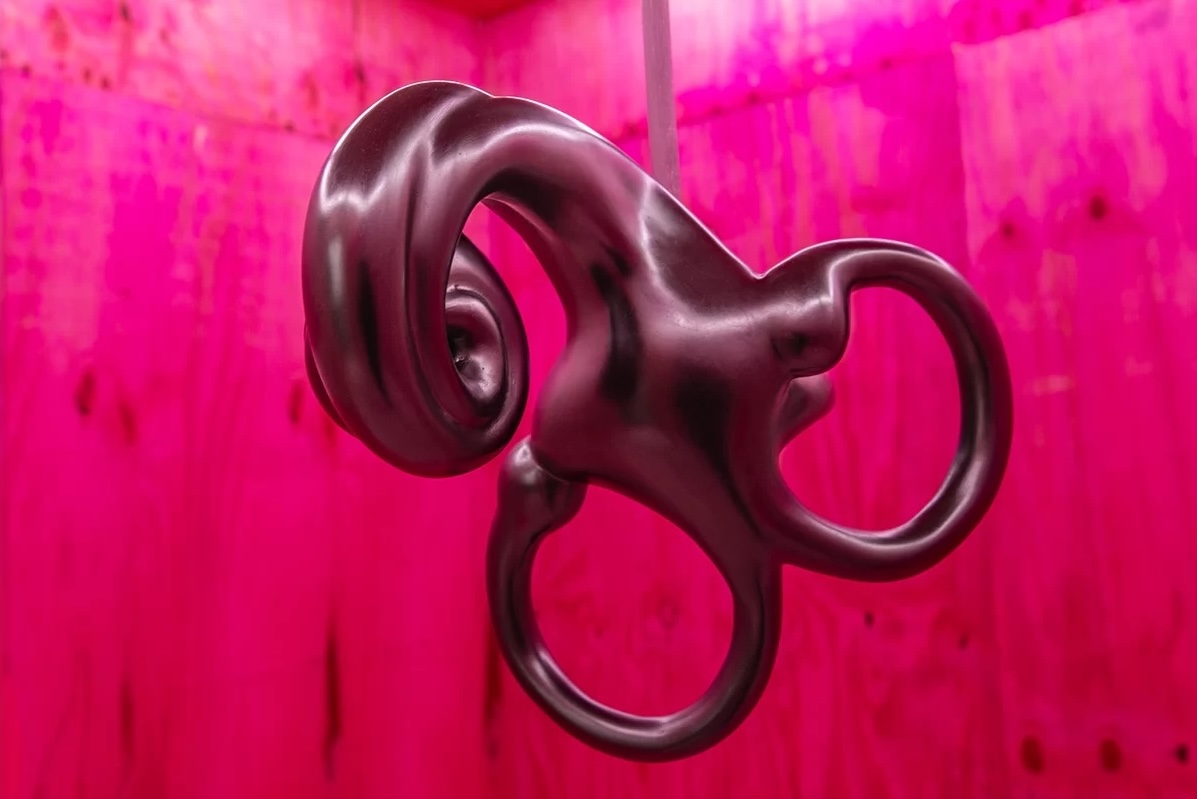
The vestibular organ: an installation reproducing the inner ear’s vestibular system, the human sensory organ of gravity, introducing the body as a site through which gravitational forces are perceived and experienced.
Together, these works construct a non-linear genealogy of gravitational attraction. Rather than treating gravity exclusively as a physical phenomenon, the exhibition proposes it as a condition of interdependence between bodies, objects, environments and the universe. The visitor is not simply invited to observe gravity, but to enter its field and experience the relationships it establishes.
For Cosmic Organology: this perspective expands the understanding of cosmic tensions beyond astronomical phenomena, approaching the universe as a network of relationships and interdependencies in which seemingly distant elements remain connected through forces that exceed human perception.
2026
Gravitational Organology
Santiago Reyes Villaveces. MIT Kavli Institute Artist Residency, 2026.
An artistic research project exploring how we can experience cosmic phenomena that exceed the limits of human perception, particularly gravitational waves and spacetime disturbances. Drawing on the physics of wave propagation, it investigates how seemingly distant elements are connected through continuous interactions.
The proposal consists of a hybrid sculptural instrument that combines anatomical and astronomical references, translating scientific data and gravitational-wave models into vibrations, sound, light and material resonance. Rather than representing scientific phenomena, the installation seeks to make them physically perceptible. Collaboration with MIT scientists is central: through the exchange of research data, simulations and technical knowledge, artistic and scientific practices would shape the sculpture’s design and interactive behaviour. Gravitational Organology invites audiences to experience the universe not only as something to observe or understand, but also as something to feel.
2022–2023
Acoustic Fossil, Cartagena
Santiago Reyes Villaveces & Daniel Villegas Vélez. Baluarte de Santa Catalina, Cartagena de Indias, 24 November 2022 – 23 February 2023. Winner, Túnel de Escape 2022, Ministerio de Cultura.
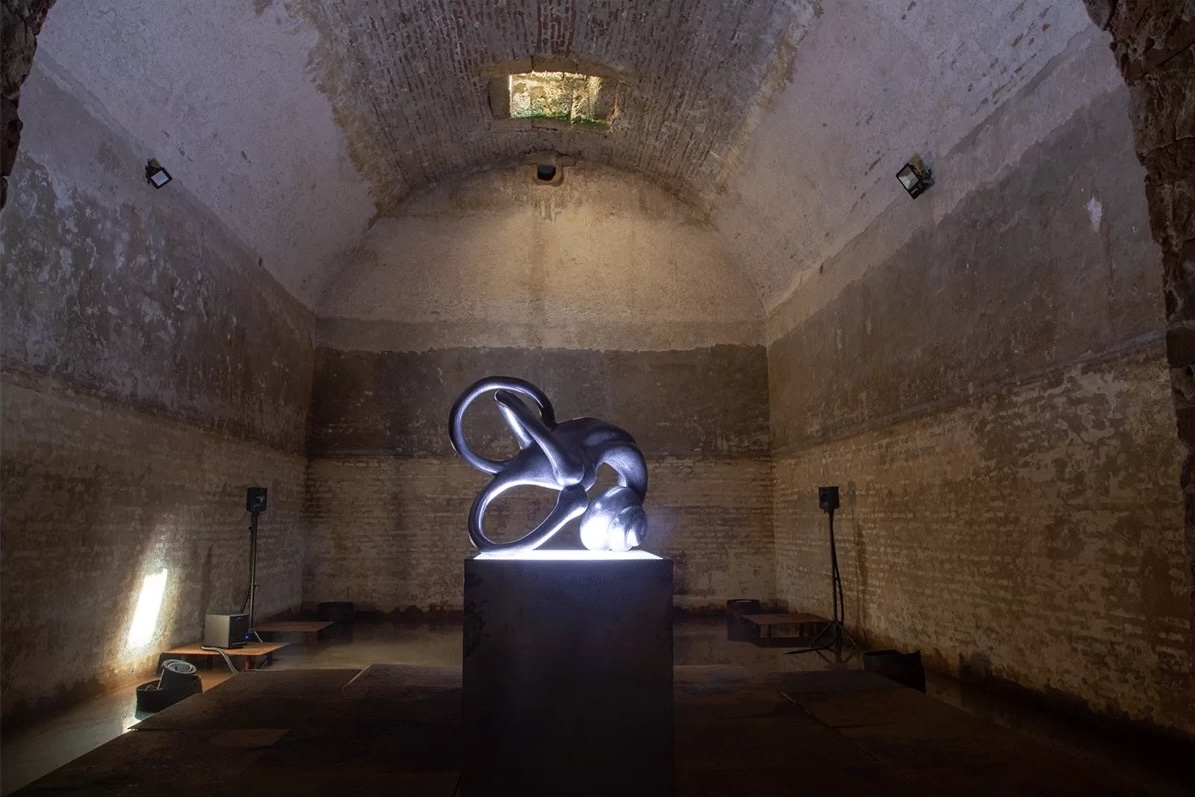
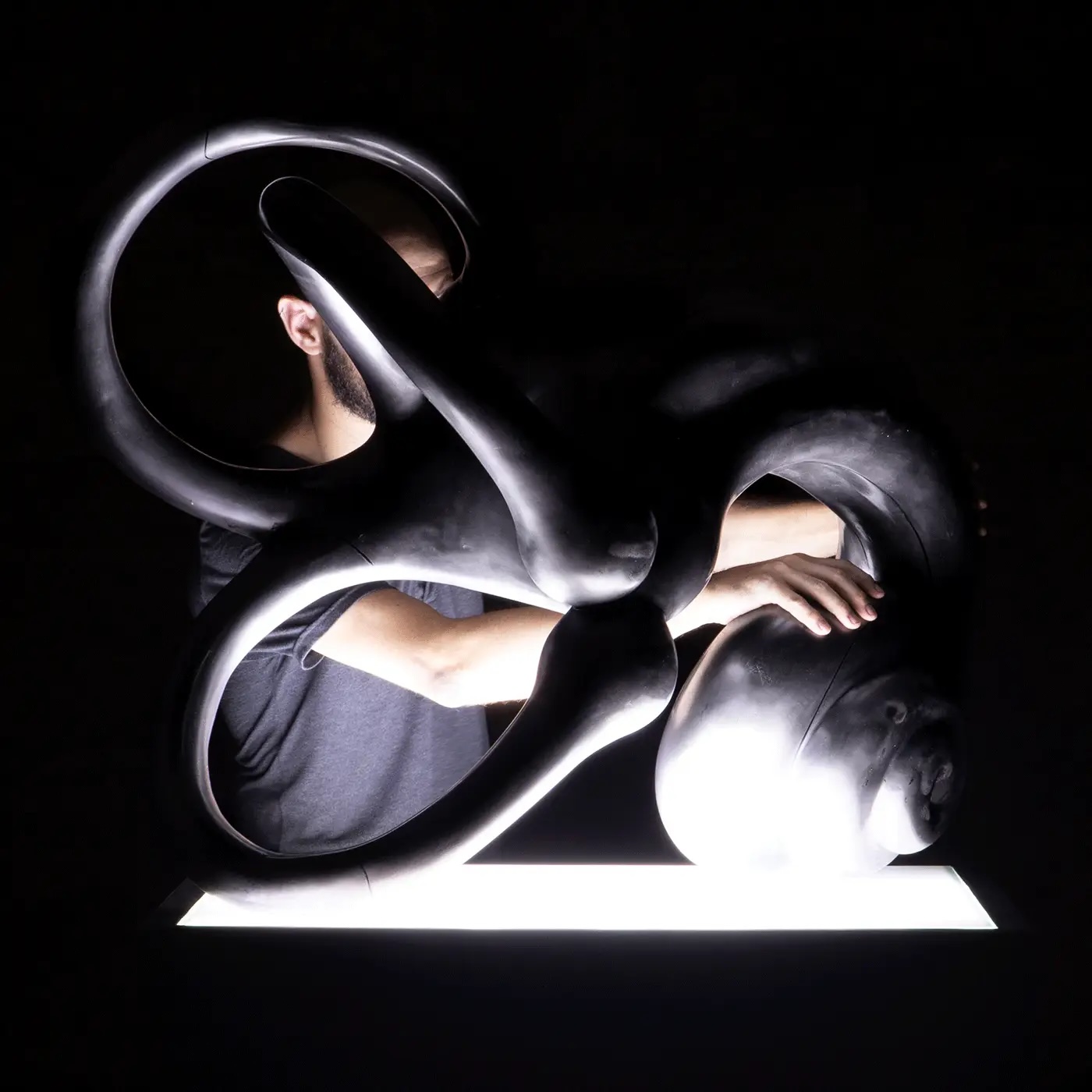
Fósil acústico transforms a space within Cartagena’s historic walls into an immersive resonance chamber, inspired by the structure of the human inner ear. Through a sculptural representation of this organ, the installation explores listening, balance and spatial perception as ways of understanding our relationship with the environment.
The work connects Cartagena’s colonial history to the contemporary climate crisis, highlighting how colonial exploitation and extractive capitalism have contributed to environmental transformations that now threaten the Caribbean, particularly its coastal communities and mangrove ecosystems. Synthesized sounds, recordings of local species and field recordings from vulnerable territories, preserving acoustic traces of ecosystems that may eventually disappear, are activated through an interactive sculpture that lets visitors modify the sonic environment, generating unpredictable combinations of resonances, noises and silences.
The installation invites visitors to reflect on climate change, environmental loss and collective responsibility through immersive and meditative listening, proposing sound as a way of sensing ecological transformations.
2024
Acoustic Fossil: Listening (with) the River
Santiago Reyes Villaveces & Daniel Villegas Vélez. Museum of Modern Art of Medellín, 26 April – 1 September 2024.
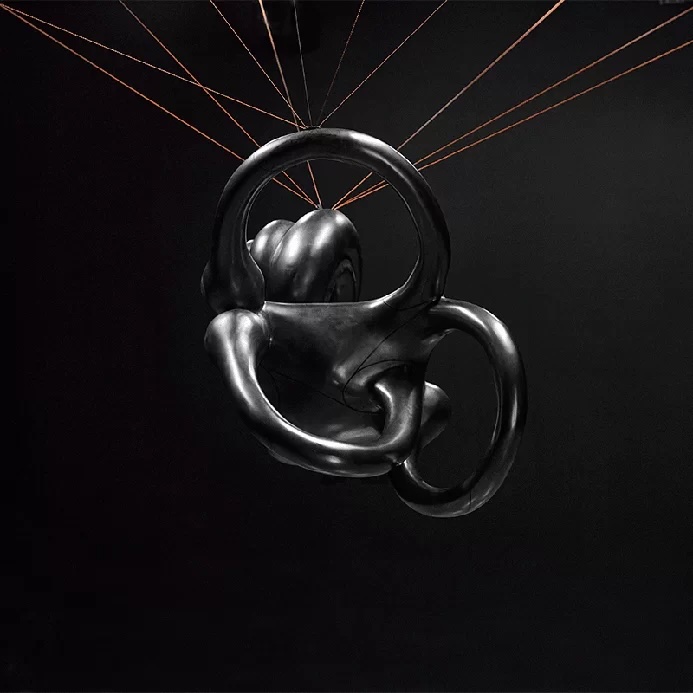
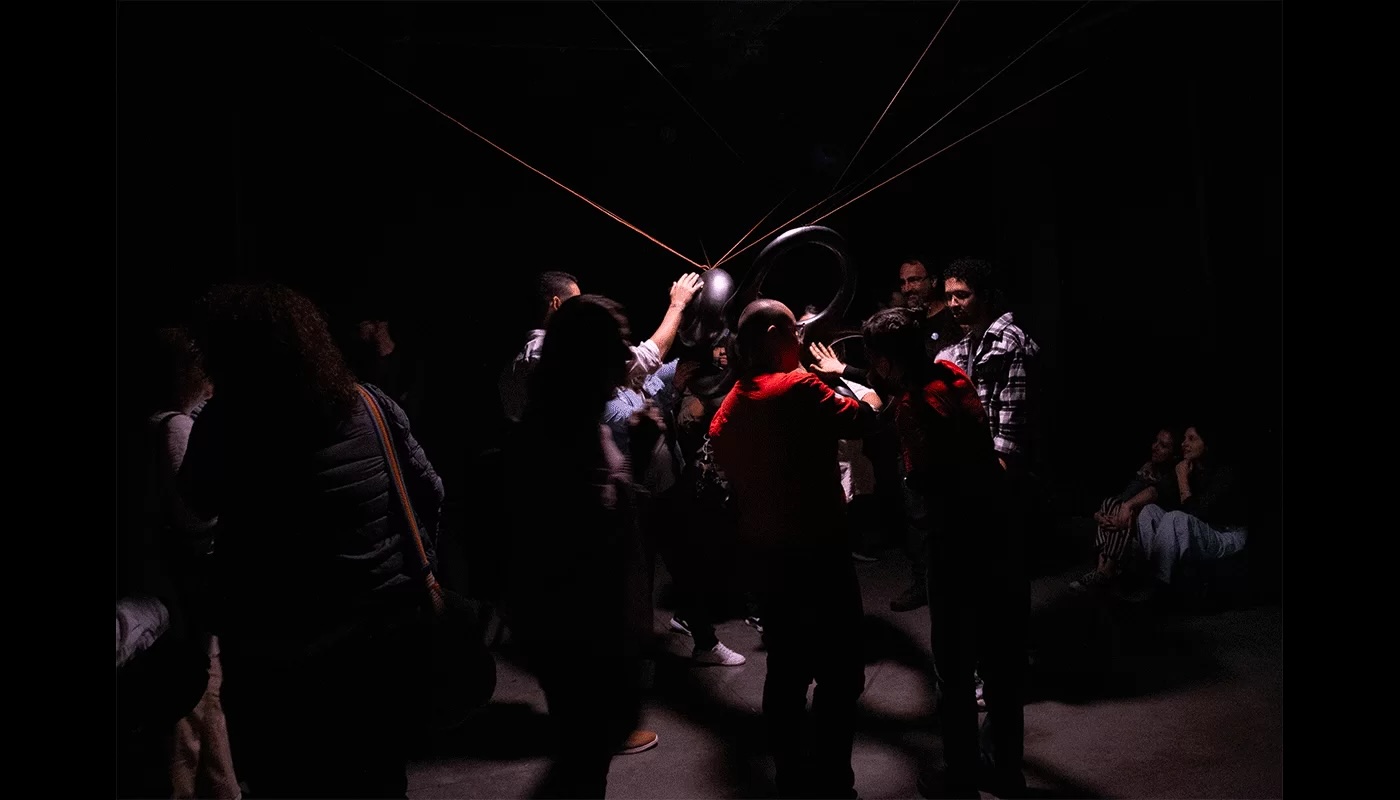
The project transforms Lab3 into a resonance chamber through a tactile sculpture shaped like the inner ear, which allows visitors to manipulate the installation’s sound environment. Field recordings and a continuous synthesized drone respond in real time both to the audience’s interaction with the sculpture and to the activity of the waters of the Aburrá River: a monitoring station near the river’s source, in San Miguel, measures currents and turbulence with hydrophones and sensors, and transmits data to the Museum to modify the timbre of the drone.
The recordings include soundscapes from the river basin collected through community workshops, and sounds of native species recorded over the past twenty years and preserved in the Humboldt Institute’s Environmental Sound Collection. Each recording becomes an “acoustic fossil”: a trace left by the interaction between human and natural forces, projected into the future as a voice that acknowledges its own ephemeral existence.
As ecosystem disruption and climate change reach irreversible levels, every sound also speaks of its imminent disappearance. The work is an invitation to feel and think about listening through the body, a situated body, and to let sound touch us while offering us the opportunity to touch listening itself.
Jaime Forero-Romero
Observational astrophysics, DESI Builder. Facultad de Ciencias, Universidad de los Andes. forero.github.io
[TODO]
DESI Builder
Jaime Forero-Romero
[TODO: role in the DESI collaboration and relevant research / outreach work.]